The morning light catches the dust motes dancing above your oak floors. You hear the familiar slow stretch of your older dog waking up in the living room, followed by the soft thump of a tail hitting the baseboard.
Then comes the sound that makes your chest tighten. It starts as a quiet clicking of nails, rapidly escalating into a frantic scrambling for traction. Your once-agile companion is splayed out, struggling to push their hind legs up against the slick polyurethane finish.
The traditional response involves a panicked trip to the home goods store. You end up masking your beautiful wood floors under a patchwork quilt of heavy carpet runners, or you wrestle your dog into rubber-gripped socks that they inevitably chew off by noon.
But protecting your aging dog doesn’t require draining your renovation budget or ruining your home’s aesthetic. A simple, near-invisible modification changes the entire physics of your floor space, turning hazardous ice rinks into secure landing pads for under five dollars.
Rethinking the Friction Equation
We tend to view slippery floors as a total surface problem. This leads to the assumption that we must cover every square inch of the walking path with thick, textured fabric.
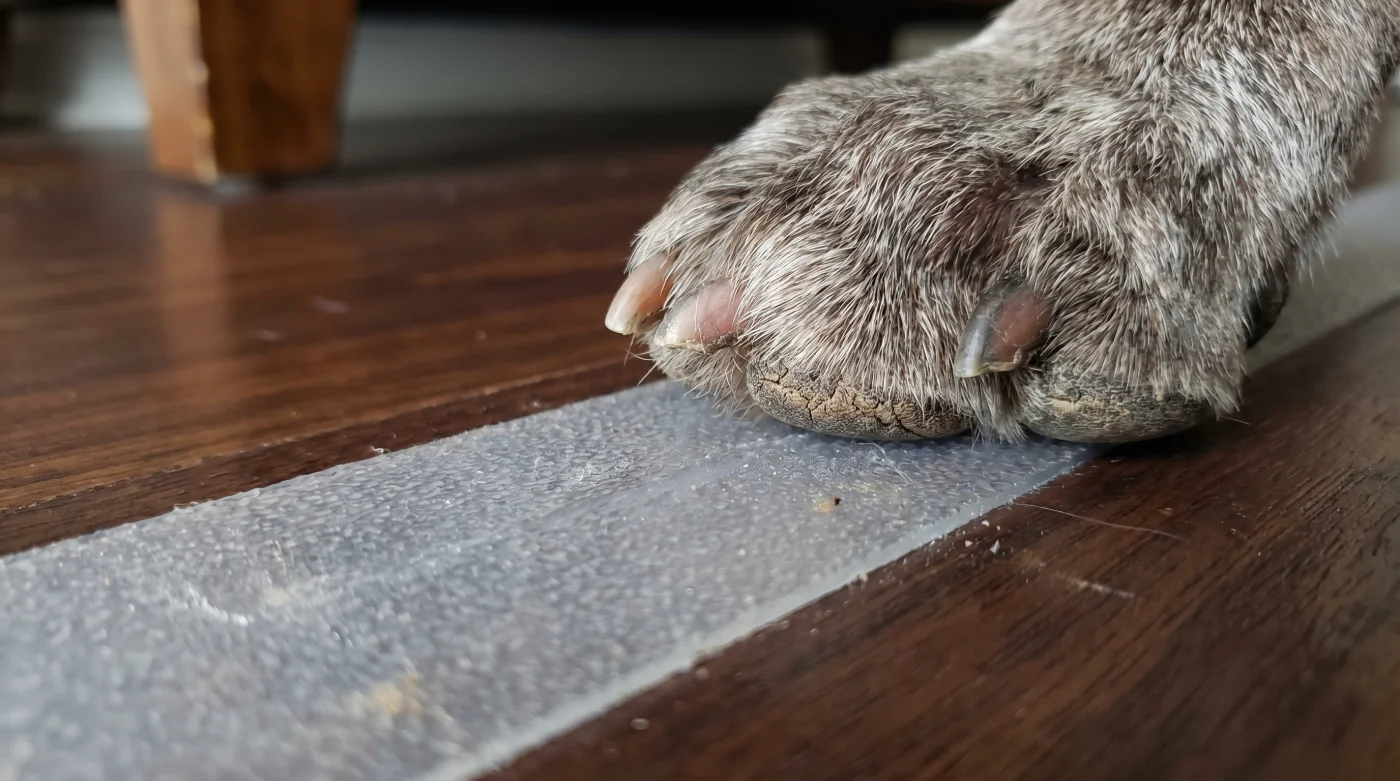
Think of your dog’s movement like a plane navigating a runway. They do not need grip across the entire sky; they only need friction at the specific points of takeoff and touchdown. By applying strategic strips of clear silicone traction tape, you create a calculated grid of safety.
This translucent, rubberized grip tape—often sold for mere dollars in the bathtub safety aisles—provides instant mechanical friction right where paws need to push off, without hiding the beautiful grain of your hardwood.
Marcus Thorne, a 46-year-old canine mobility specialist operating out of a quiet clinic in Denver, discovered this bypass almost by accident. While visiting the home of an arthritic Golden Retriever, Marcus watched the owners lay down hundreds of dollars of heavy oriental rugs. Recognizing the dog only slipped when rising from his bed or turning a sharp corner into the kitchen, Marcus went to his truck, grabbed a roll of clear bathtub tread tape, and applied three parallel strips at the trouble spots. The dog stood up effortlessly, and the owners couldn’t even see the fix from a standing height.
Mapping Your Dog’s Micro-Geographies
Not all floor space is created equal. To implement this minimalist fix, you have to observe how your dog navigates your specific floor plan.
For the Heavy Sleeper: Focus on the Rising Stations. These are the immediate two square feet surrounding their favorite dog bed or the corner of the sofa, where they need momentum directly under their weight to generate upward thrust.
For the Kitchen Patroller: Watch the Braking Zones. When your dog smells dinner, they trot toward the food bowl and attempt to stop. Apply the silicone strips perpendicular to their path of travel, about three feet before the bowl, to prevent the slide-and-crash.
For the Anxious Pacer: Target the Pivot Points. Notice the exact spots where your dog changes direction, usually the sharp turn at the bottom of a staircase. An invisible cross of tape here stops the lateral slip that causes strains in aging hips.
Laying the Invisible Safety Net
The installation requires patience, not brute force. You are dealing with highly adhesive material, so preparation determines the longevity of the grip and protects your floor’s finish.
Start by completely stripping the application zone. Use a mixture of warm water and a drop of dish soap to remove any wax, floor polish, or paw oils, then dry it with microfiber cloth. A completely bare, dry surface ensures the silicone backing fuses perfectly with the wood finish without peeling up at the corners.
Here is your Tactical Toolkit for application:
- Clear Silicone Traction Tape: 2-inch width (specifically PEVA material sold for bathtub safety).
- Isopropyl Alcohol: For the final wipe-down of the designated tape zones.
- A Hairdryer: To gently warm the tape after applying, activating the adhesive backing.
- A Rubber Brayer: Or a heavy rolling pin to press out microscopic air bubbles.
Cut the tape into modest strips, rounding the corners with scissors before you peel the backing. Because sharp corners catch dog nails and human socks, rounded edges deflect friction and stay anchored for months. Lay the tape down lightly, breathing out as you press the rubber roller from the center outward to push out air.
The Dignity of Sure Footing
Watching an older dog lose their physical confidence is one of the heaviest burdens of pet stewardship. They start to hesitate at the edge of the carpet, calculating the risk of crossing the room just to get a drink of water.
When you map their environment and lay down these invisible anchors of support, you are doing more than preventing a veterinary bill. You are giving them back their autonomy and removing the daily fear of falling.
The next morning, when the sun warms those oak planks again, you won’t hear the frantic scratching of panic. You will just hear the steady rhythm of your oldest friend walking across the room to greet you.
“Confidence in an older dog begins from the ground up; when they trust the floor beneath them, their entire posture changes.” — Marcus Thorne
| Key Point | Detail | Added Value for the Reader |
|---|---|---|
| Coverage Area | Targeted strips vs. Wall-to-wall runners | Preserves the aesthetic of your hardwood floors while reducing cleaning hassle. |
| Cost Factor | $5 roll of silicone tape vs. $150+ in area rugs | Achieves superior targeted traction at a fraction of the cost of heavy textiles. |
| Application | Custom-cut pivot points and braking zones | Allows you to adapt the friction exactly to your dog’s unique walking patterns. |
Frequently Asked Questions
Will clear silicone tape damage my hardwood floors?
If your floors have a modern, intact polyurethane finish, PEVA silicone tape pulls up cleanly. Test a small hidden corner first if your floors are antique or wax-finished.How long does the traction tape last?
When applied to a properly degreased surface with rounded corners, a high-quality bathtub traction strip easily lasts six to twelve months under heavy paw traffic.Do I need to cover the entire hallway?
Not at all. Dogs usually slip at the initial push-off or when braking. Placing a few strips at the start and end of the hallway is often enough to secure their route.What if my dog still slips on the tape?
Ensure you bought silicone or PEVA textured tape, not smooth packaging tape. The surface should feel like a soft rubber eraser, providing immediate mechanical grip.Can I mop over the silicone strips?
Yes. Once the adhesive cures for 24 hours, you can sweep, vacuum, and damp-mop over the strips just like the rest of your hardwood flooring.