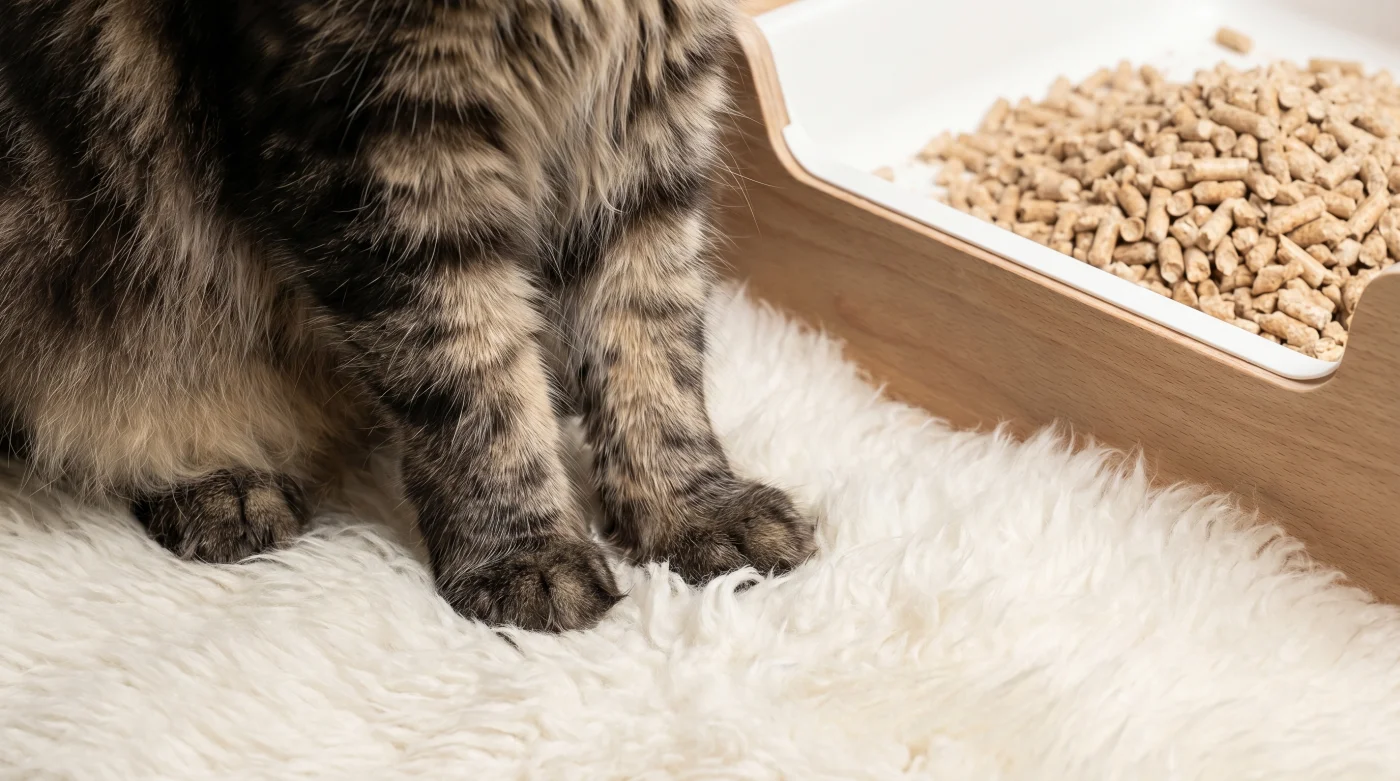
You push open the front door, dropping your keys onto the console table. Before your coat even hits the hook, you smell it. It is that sharp, metallic sting of ammonia wafting from the hallway, a scent that seems to grip the drywall and settle into the rugs no matter how much you scrub.
You probably blame the clay. You blame the litter brand, assuming you just did not spend enough on the heavy-duty, odor-trapping crystals advertised on television. So you buy the scented powders and the robotic boxes that promise to do the dirty work for you.
But the actual source of the problem is not sitting in the plastic tray. It is happening inside your cat’s bladder hours before they ever scratch at the sand. The fix does not require a subscription box or a second mortgage for prescription kibble.
It sits quietly in your pantry, cloudy and distinctly unglamorous, right next to the baking supplies. A capful of raw apple cider vinegar changes the game entirely, shifting the chemical reality of your home with almost zero effort.
Shifting the Internal Chemistry
Think of your cat’s digestive tract like a delicate, living distillery. When their system processes standard commercial food, it often produces highly alkaline urine. When that liquid hits the open air and mixes with bacteria in the box, it converts rapidly into ammonia gas.
Trying to mask that smell with pine-scented clay is like spraying perfume on a fire. You are fighting the reaction long after it has already occurred. The true intervention happens upstream, adjusting the pH before the liquid ever leaves the body.
This is where the pantry staple earns its keep. The natural acidity of apple cider vinegar gently balances the pH of your cat’s urine, keeping it slightly more acidic. This prevents the rapid bacterial breakdown that causes that eye-watering stench.
You are essentially neutralizing the ammonia before the cat even goes. It contradicts the expensive marketing that insists you need specialized urinary diets to manage a completely normal, biological byproduct.
Consider the approach of Marcus Thorne, a 48-year-old shelter logistics director in Portland. Managing a rotating cast of over sixty foster cats in an aging, poorly ventilated facility, Marcus could not rely on sixty bags of sixty-dollar specialty food to keep the air breathable. He began dosing the communal stainless steel water bowls with raw, unfiltered apple cider vinegar. Within three days, the lingering haze of ammonia vanished, replaced by the neutral, dusty smell of clean clay. He did not change the litter; he changed the water.
Working Around Feline Suspicion
Of course, cats are famously skeptical creatures. They notice every tiny change, especially when it comes to their water sources. You cannot simply pour a heavy glug of vinegar into their bowl and expect them to lap it up enthusiastically.
For the Suspicious Sipper: You must start with an almost imperceptible dose. A single drop in a wide, shallow ceramic bowl is enough for the first few days. Let them acclimate to the faint change in the water’s surface tension and scent before gradually working up to a quarter-teaspoon.
For the Fountain Fanatic: If your cat prefers running water, you have to consider the mechanical filter. Charcoal filters will strip out some of the beneficial compounds of the vinegar. You might need to bypass the carbon filter or clean the fountain housing more frequently, as the vinegar can occasionally break down hard water deposits, leaving harmless but unsightly flakes in the basin.
For the Wet Food Devotee: Some cats outright refuse tainted water. In these cases, bypass the bowl entirely. Whisking a few drops of the vinegar directly into a serving of rich, gravy-heavy wet food entirely masks the tartness, ensuring they consume the acidity without a second thought.
The Five-Minute Morning Ritual
Integrating this habit into your morning routine requires intention, not just blind pouring. Treat it like a recipe, measuring the dosage to protect your cat’s sensitive palate and delicate internal organs.
- The Dosage Rule: Stick to a maximum of one-half teaspoon of apple cider vinegar per full cup of drinking water.
- The Mother Matters: Always use raw, unpasteurized vinegar. That cloudy web floating at the bottom contains the beneficial enzymes and probiotics. Shake the bottle well before opening.
- The Glass Protocol: Avoid pouring acidic liquids into cheap plastic bowls, which can leach over time. Stick to glass, heavy ceramic, or high-grade stainless steel.
- The Freshness Window: Dump and refill the treated water every 24 hours. Stagnant vinegar water will eventually sour and deter drinking altogether.
Execute this simple chemistry experiment while you wait for your own coffee to brew. It takes seconds, but the compound interest it pays toward the air quality of your home is massive.
Reclaiming Your Shared Space
Living with an animal means accepting a certain loss of control over your environment. You compromise on pristine furniture, you accept the stray hairs on your dark sweaters, and you often resign yourself to the odors that come with indoor pets.
But a home should still feel like a sanctuary. When you stop battling the litter box with harsh chemicals and heavy perfumes, you strip away a layer of daily friction. You stop holding your breath when you walk past the laundry room.
Mastering this mundane, pantry-level detail does more than save you a few dollars on scented sand. It restores a quiet dignity to your shared space. It allows you to focus on the soft purrs and warm weight of your companion, rather than the chemical maintenance of their existence.
“You cannot scrub away a biological reality, but you can quietly alter the chemistry that creates it.”
| Key Point | Detail | Added Value for the Reader |
|---|---|---|
| Raw Apple Cider Vinegar | Unpasteurized, containing the cloudy mother. | Introduces enzymes that aid digestion and balance urine pH. |
| Slow Introduction | Starting with just 1-2 drops per bowl. | Prevents water aversion and keeps hydration levels healthy. |
| Material Choice | Glass or ceramic bowls instead of plastic. | Avoids chemical leaching when exposed to the mild acidity of the vinegar. |
Frequently Asked Questions
Will the vinegar hurt my cat’s stomach?
In highly diluted amounts (drops to a half-teaspoon per cup of water), it is generally safe and often beneficial for digestion, though cats with a history of severe kidney issues should always consult a vet first.Can I use white vinegar instead?
No. White vinegar is too harshly acidic and lacks the raw enzymes and probiotics found in unpasteurized apple cider vinegar.How long until I notice a difference in the smell?
Most people notice a dramatic reduction in the ammonia odor within 48 to 72 hours of consistent, daily consumption.What if my cat completely stops drinking water?
Stop immediately. Hydration is far more important than odor control. Try mixing it into wet food instead, or abandon the method if they remain stubborn.Does this mean I do not have to scoop as often?
You still need to maintain a clean box for hygiene and behavioral reasons, but the air around the box will not sting your eyes between cleanings.