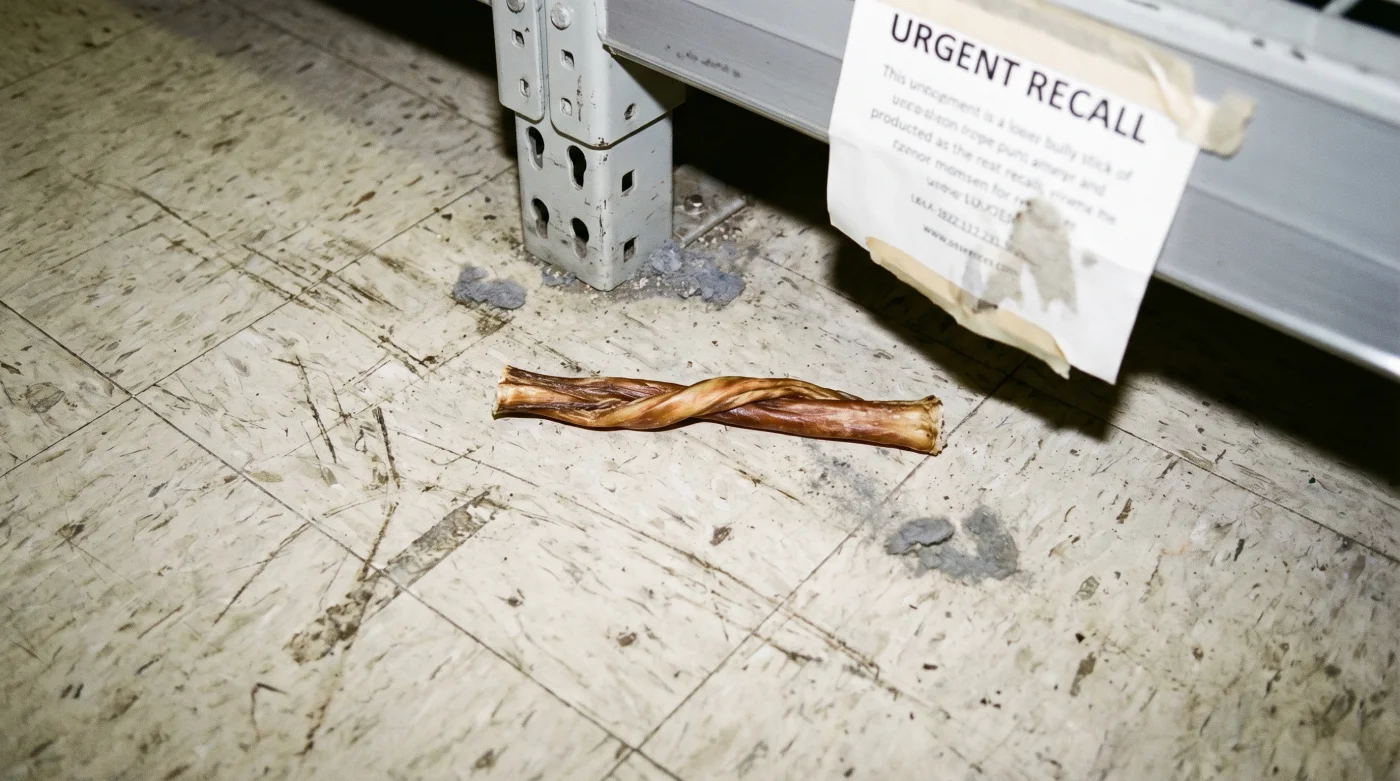
The rhythmic thump-thump of a tail on the hardwood. The quiet focus of a dog working on a high-value chew in the corner of the living room. It feels like a small, daily victory. You get thirty minutes of silence to drink your coffee, and your dog gets a natural outlet for their physical energy and anxiety.
You probably bought it at a trusted Pennsylvania pet supply store, perhaps a brightly lit boutique in Lancaster or a sprawling big-box aisle in King of Prussia. The packaging felt deeply reassuring. Thick plastic wrapping, earthy typography, and that single, heavy word printed across the front: natural.
But nature is rarely sterile. We tend to assume the industrial dehydration process acts as a permanent shield, pausing time and locking out harmful bacteria. We toss these dried animal items into our grocery bags right alongside our fresh apples and sandwich bread without a second thought.
Now, a sweeping recall has shattered that comfortable routine. Shelves are being urgently emptied across the state as a severe Salmonella outbreak reminds us that single-ingredient is often just a friendlier term for raw, cured tissue.
The Illusion of the Shrink-Wrapped Shield
Stop thinking of a dehydrated natural chew as a piece of inert plastic. Instead, imagine it as a dry, dormant sponge. When you hand over a bully stick, you aren’t giving your dog a manufactured toy. You are handing them a biological product. The curing process removes just enough moisture to prevent immediate decay, but it completely fails to sterilize the dense interior material.
When the chew gets warm and coated in saliva, dormant bacteria like Salmonella can suddenly reactivate. What was perfectly safe sitting in a cold warehouse suddenly wakes up and begins to multiply exponentially right across your living room rug.
Sarah Jenkins, a 42-year-old veterinary microbiologist working out of a diagnostic lab near Harrisburg, spends her days swabbing the very things we let our dogs chew on the couch. She routinely watches pet owners meticulously scrub their hands with scalding water after handling raw chicken for dinner, only to pick up a wet, half-eaten bully stick barehanded to toss it back into the toy bin. She points to a culture plate blooming with dense bacterial colonies to make her point. The raw reality is that a natural dog chew belongs in the exact same mental risk category as the raw meat sitting in your refrigerator.
Mapping the Invisible Spread in Your Home
This current localized recall isn’t just about the affected dogs. It is heavily about the humans who share their indoor air and space. How this bacterial risk actually manifests depends entirely on the physical layout of your life.
For the Family with Toddlers
Babies and toddlers live their lives at floor level. When a dog works heavily on a contaminated chew, microscopic fragments of saliva and bacteria embed deeply into carpet fibers and baseboards. A child crawling right across that same patch of rug three hours later inevitably puts their unwashed hands directly into their mouth.
Here, the daily priority shifts from monitoring the dog’s digestion to aggressively sanitizing the household contact zones with hot water extraction and friction.
For the Apartment Dweller
In smaller residential spaces, dogs rarely have a dedicated, hard-surface chewing area like a mudroom. The stick inevitably comes up onto the sofa or the foot of your bed. The bacteria transfers directly onto the very fabrics you sleep against, bypassing normal immune defenses.
For the Multi-Pet Household
Contamination moves rapidly through shared communal water bowls. One dog chews the affected stick, takes a long, sloppy drink, and leaves a heavy bacterial backwash that the feline roommates or younger puppies ingest minutes later.
The Immediate Kitchen Quarantine
Addressing this state-wide recall requires stripping away the immediate panic and moving highly systematically through your home. You need to handle the affected products as if they are actively spoiling meat bleeding onto your counters.
Do not throw the sticks in the kitchen trash where other animals or foraging insects might easily reach them. You must break the cycle immediately by controlling the physical environment.
- Put on thick disposable gloves before touching any chew currently in circulation around your house.
- Gather the loose treats, the original wrappers, and any soft plush toys the dog mouthed immediately after chewing.
- Double-bag the sticks in heavy plastic, seal them tightly, and walk them directly out to the outdoor municipal bin.
- Wash your hands with hot, soapy water for twenty full seconds after removing the gloves.
- Wipe down hard surfaces where the chew rested using a heavily diluted bleach solution or a strong enzyme-based cleaner.
The Tactical Toolkit: You will need heavy-duty garbage bags, an instant-read surface thermometer, and an enzymatic fabric cleaner. Water used to wash pet bowls must hit exactly 165 Fahrenheit to effectively kill persistent Salmonella strains.
Rethinking the Pantry Threshold
The immediate dust will eventually settle from this specific Pennsylvania recall, but the underlying vulnerability in our kitchens will permanently remain. This event is a harsh mirror reflecting our cultural blind spots regarding modern pet care.
We desperately want the best for our animals, so we automatically reach for the products closest to the earth. Yet, the closer you get to the earth, the more soil and biology you have to deal with. True peace of mind does not come from blindly trusting a colorful label; it comes from deeply understanding the raw biology of the items you carry across your threshold.
By treating natural chews with a chef’s caution, you successfully protect your home without ever depriving your dog of what they love. It is a quiet, deliberate shift in perspective. You are swapping blind trust for mindful, mechanical practice.
Safety isn’t found on a colorful label; it is built in the daily habits of how we handle the things we bring into our homes. – Sarah Jenkins, Veterinary Microbiologist
| Key Point | Detail | Added Value for the Reader |
|---|---|---|
| Verification | Check lot numbers on the packaging directly against the official FDA recall list. | Prevents you from throwing out safe, highly expensive products unnecessarily. |
| Disposal | Double-bag the sticks and place them securely in an outdoor municipal bin. | Eliminates the distinct risk of neighborhood wildlife or your own pet digging them out. |
| Sanitation | Wash all communal pet bowls in water exceeding 165 Fahrenheit for five minutes. | Stops the invisible cycle of cross-contamination hidden inside shared drinking water. |
Crucial Questions About the Outbreak
Is my dog going to get sick if they already ate one?
Not necessarily. Dogs have highly acidic stomachs designed to handle heavy bacterial loads, but you must watch for lethargy, sudden vomiting, or bloody diarrhea over the next 72 hours.
Can I just boil the remaining sticks to save them?
No. Boiling fundamentally alters the structural integrity of the chew, turning a tough treat into a brittle hazard that can violently splinter and puncture the delicate digestive tract.
Are humans actually at risk here?
Yes. The primary danger of Salmonella on pet treats is actually human infection through improper handling or touching contaminated living room surfaces before eating food.
How long does Salmonella live on a carpet?
In dry, warm indoor environments, the bacteria can easily survive for several weeks embedded deep in soft fibers if not treated with appropriate heat or chemical sanitizers.
Should I stop buying natural chews entirely?
There is absolutely no need to abandon them. Simply shift your handling habits: wash your hands immediately after touching them, and restrict all chewing to easily cleanable hard floors.