The morning frost cracks under your boots as your golden retriever pulls toward his favorite fire hydrant. You hear the familiar jingle of his collar—the rabies tag clinking against the star-shaped brass plate bearing his name and your phone number. For years, that metallic soundtrack was the only proof you needed to show he belonged to you. You pay your county fee, clip on the new tag, and walk away feeling secure.
But that quiet morning routine is about to change. Underneath the radar of most local news cycles, Pennsylvania legislators quietly pushed through a significant update to the state’s dog laws. The brass tag is no longer the final word in ownership.
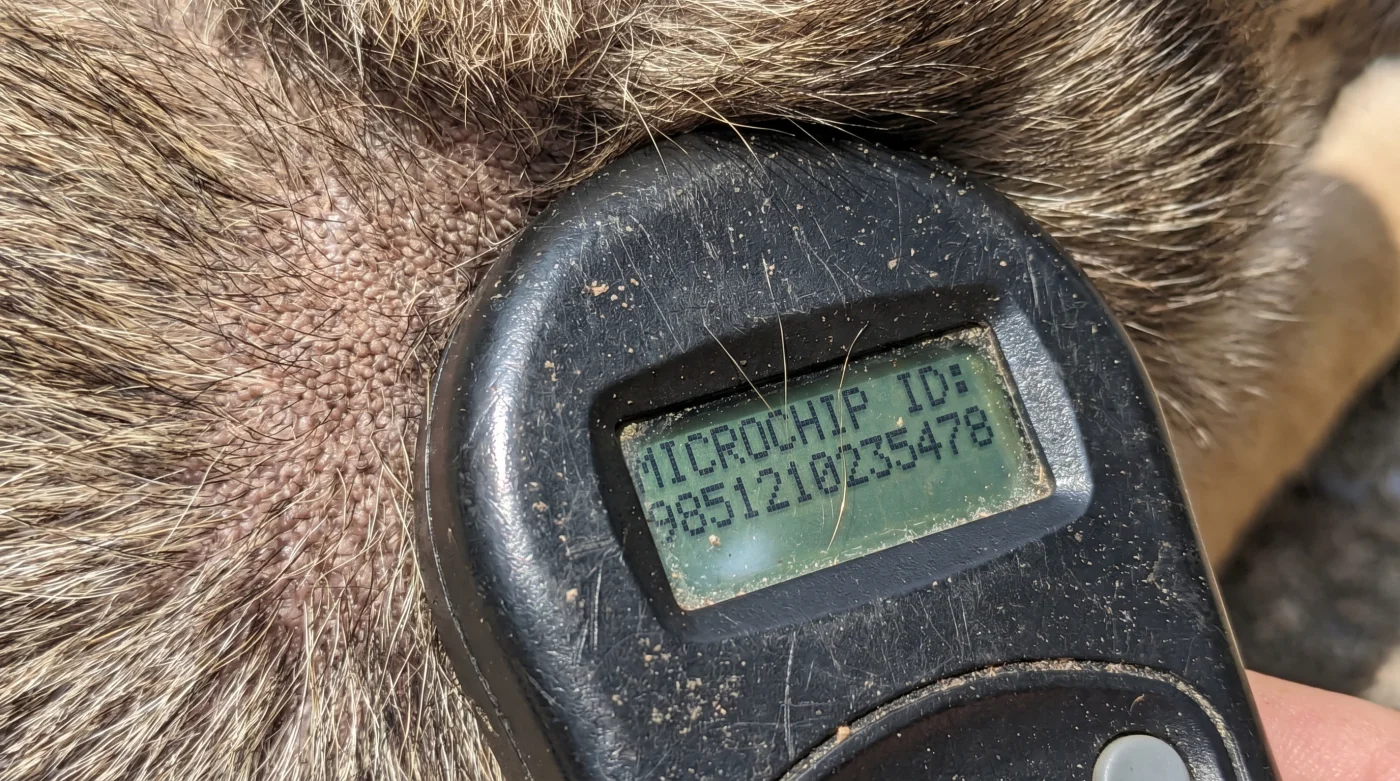
Starting next month, animal control officers and local shelters won’t just be looking for a collar. They will be sweeping a handheld wand over your dog’s shoulder blades. If they hear silence instead of a beep, you might be handed a piece of paper that hits your bank account hard. A $500 fine is waiting for those who assume the old rules still apply.
The era of the paper trail has ended. Your dog’s legal identity is now an entirely digital footprint.
From Spare Key to Digital Passport
For decades, we treated microchips like a spare key hidden under the porch mat. It was a secondary backup, something you only relied on if the collar slipped off or a gate was left open during a thunderstorm. The primary proof of ownership was always visible, stamped in cheap metal.
You need to view this new legislation as a complete reversal of that system. The microchip is no longer the backup; it is the passport. The state is telling you that a collar can be stolen, lost, or swapped, but the grain of rice under the skin cannot. By mandating a scan and imposing a steep penalty for unregistered or unchipped dogs, the local government is forcing a shift in how we define a pet’s legal identity.
Marcus Thorne, a 48-year-old animal control supervisor operating out of Lancaster County, spent the last three months re-training his staff on the new compliance protocols. “People look at me like I have two heads when I tell them the collar tag isn’t enough anymore,” Marcus notes while recalibrating his team’s universal scanners. “They think because they bought the lifetime license in 2019, they are grandfathered into the old system. They aren’t. We are required to scan every dog we interact with now, and if that chip isn’t there, or if it traces back to a dead phone number, my hands are tied. The citation writes itself.”
Navigating the Mandate by Household
The way you handle this deadline depends entirely on how your dog entered your life. Not all microchips are maintained equally, and assuming yours is fine could be a costly mistake.
For the Rescue Adopter: If you brought your dog home from a shelter, they are almost certainly chipped. The danger here lies in the paperwork. Many adopters assume the shelter automatically transferred the registration into their name. Often, the chip still pings back to the rescue organization. You need to physically verify the registry to ensure your address is the one attached to the serial number.
For the Purebred Owner: Breeders frequently chip puppies before sending them to their forever homes, but they use a batch registration system. The chip might only identify the breeder’s kennel rather than your specific household. You must claim the chip number and pay the one-time transfer fee to a national registry to avoid falling out of compliance with the new scanning mandate.
For the Senior Dog Guardian: Older dogs face a unique hurdle. A chip implanted ten years ago might operate on a frequency that modern universal scanners struggle to read, or it might have migrated down the dog’s leg over the years. You have to ask your vet to perform a test scan to ensure the technology can still communicate with modern scanners effectively.
The 15-Minute Compliance Audit
Securing your dog’s legal status doesn’t require a stressful afternoon at the municipal building. It requires a quiet fifteen minutes at your kitchen table with a cup of coffee and your phone. You just need to follow the digital thread.
Start by locating your dog’s paperwork. You need to find the 15-digit number that matches your pet’s record. If you cannot find it, a quick trip to the vet or even a local pet supply store with a scanner will give you the digits you need.
- Navigate to the AAHA Universal Pet Microchip Lookup tool online.
- Type in the 15-digit number to identify which company holds the registry.
- Log into that specific company’s database and check the contact information.
- Update your current cell phone number, physical Pennsylvania address, and email.
- Save the confirmation page as a screenshot on your phone.
Your Tactical Toolkit for this audit includes nothing more than your smartphone, your dog’s adoption folder, and a universal scanner, which most groomers and vets will let you use for free.
Beyond the Ledger
Nobody likes a surprise penalty, especially one wrapped in bureaucratic red tape. A $500 citation is enough to ruin anyone’s month. But if you look past the frustration of a new state mandate, there is a profound layer of security built into this shift.
We tie ourselves to these animals with an invisible thread of affection and routine. We memorize the exact spot behind their ears that makes their leg thump. We know the specific pitch of their bark when the mail carrier arrives. Now, the law requires a physical anchor for that bond.
When you update that registry and ensure your dog is compliant, you are doing more than dodging a fine. You are guaranteeing that no matter where they wander, or whose jurisdiction they cross into, their identity is inextricably linked to yours. You are making sure that the quiet morning walks can continue, uninterrupted, for years to come.
“A microchip without updated registration is just a silent grain of rice; it is the data you attach to it that brings your dog home.” — Marcus Thorne
| Key Point | Detail | Added Value for the Reader |
|---|---|---|
| Mandatory Scanning | Officers now scan all dogs rather than just checking physical collar tags. | Prevents fines by alerting you to update your digital records immediately. |
| Registry Verification | Microchips often default to the breeder or shelter’s contact information. | Ensures you are legally recognized as the primary owner in a dispute. |
| Chip Migration | Older microchips can move from the shoulder blades down into the leg. | Prompts a quick vet check to guarantee scanners can actually read the chip. |
Frequently Asked Questions
Does this law apply to indoor-only dogs? Yes. If your dog ever slips out the door or requires emergency medical transport, local ordinances still apply.
How much does it cost to update my microchip? Most registries offer free updates, though a few premium databases charge a small annual fee of around $20.
Can I chip my dog myself? No. Implantation requires a sterile environment and precise placement by a veterinary professional.
What if my dog’s chip is an older 9-digit model? Universal scanners can read 9, 10, and 15-digit frequencies, but you should have your vet test it to be safe.
Will the county notify me if I am out of compliance? No. The burden of proof falls on the owner during any interaction with animal control.