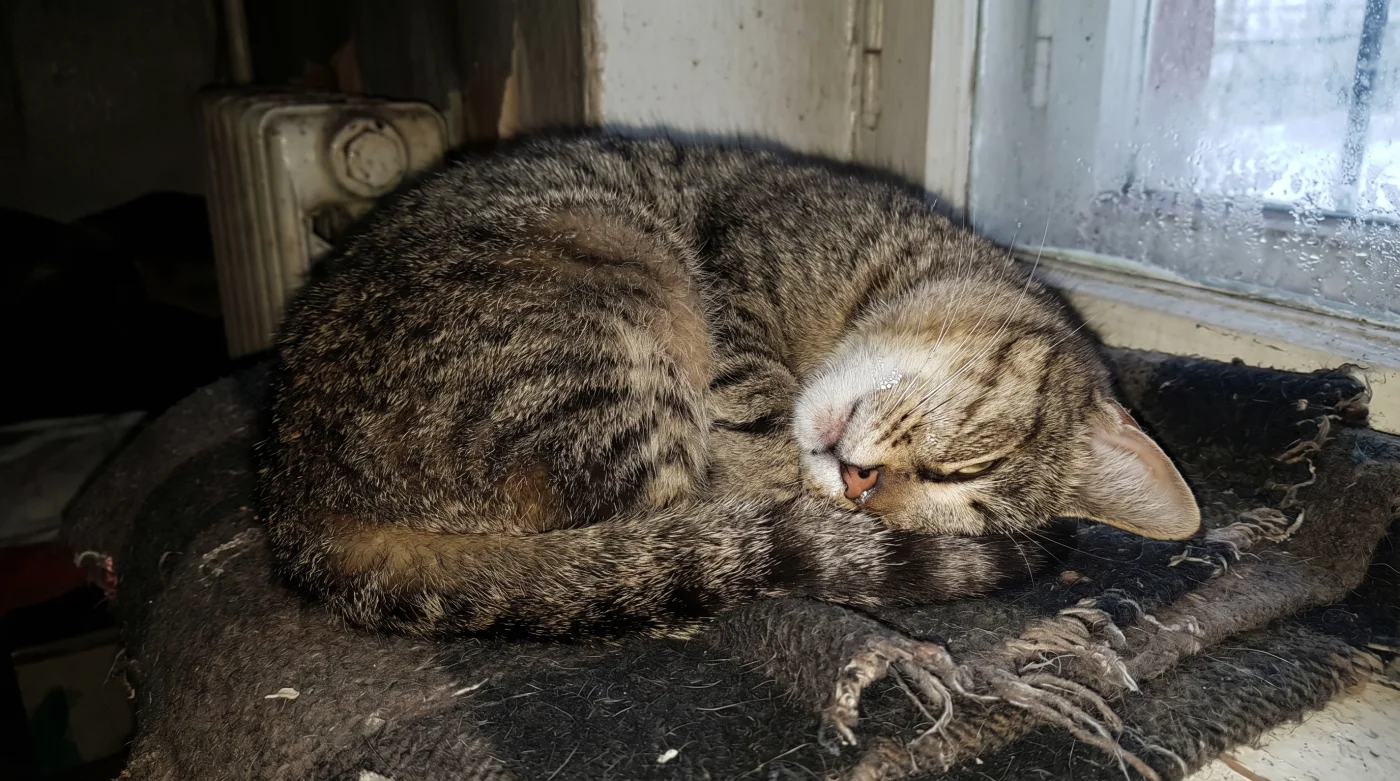
The house is finally quiet. Only the low hum of the refrigerator and the faint orange glow of a streetlamp spilling through the living room blinds keep you company. The frantic energy of the day has settled into a calm domestic rhythm. You glance over at the sofa, and there is your cat, curled into an impossibly tight circle.
They look like a spilled drop of ink or a dusted pastry, depending on their coat. We tend to assume this is a quirk of feline geometry, much like how a teenager sprawls haphazardly across a bed. We document it, share it with friends, and move on.
But that specific posture—the tail pulled tight across the face, wrapping the nose like a built-in scarf—is not an accident of comfort. It is a biological maneuver executed with pinpoint precision.
When your cat covers their nose with their tail, they are trapping their exhaled warmth, creating a personal microclimate against the ambient air. Your pet is quietly telling you that the temperature in the room has dropped, and they are managing the deficit themselves.
The Biological Draft Detector
We often misinterpret animal behavior by layering our human motives over it. You might assume your cat is simply blocking out the morning light or seeking a feeling of security. Think of it less like a blanket and more like breathing through a pillow on a brisk camping trip.
The feline nose is a patch of exposed, hairless skin that loses heat faster than almost any other part of their body. By covering that sensitive tissue, they recycle the humid warmth of their own breath, much like a person pulling a wool collar up over their mouth in January.
This means your living space holds a hidden draft. The thermostat across the hall might read a comfortable seventy degrees, but down on the floorboards, near the base of the windows, the air tells a colder story.
Marcus Vance, a forty-four-year-old architectural consultant and feline behavior researcher, spent three years tracking micro-climates in older homes. He installed thermal cameras in spaces occupied by indoor cats to monitor how domestic animals respond to microscopic shifts in their environment. He noticed a persistent pattern: cats resting in rooms that experienced a sudden two-degree drop from window drafts would consistently shift from a loose sprawl to the tight, tail-over-nose crescent. It wasn’t the overall room temperature triggering the shift, but rather the unseen, slow-moving cold air pooling near the baseboards where they slept.
Variations in the Cold
Understanding this behavior requires looking closely at how they execute the wrap. The way a cat positions their body gives you a surprisingly accurate map of your home’s thermal weak points.
The Tight Crescent
This is the full seal. The spine is curved to its absolute limit, the paws are tucked completely beneath the chest, and the tail is acting as a physical barrier over the nose. This posture absolutely signals an active draft, usually pulling in from an improperly sealed door or a single-pane window. They are actively fighting off a chill, treating their own body as a barricade against the dropping temperature.
The Loose Drape
Here, the cat is curled, and the tail is resting near or lightly across the face, but the body tension is relaxed. The paws might still be slightly visible. They aren’t freezing, but the floor is holding a baseline chill. It’s the feline equivalent of leaving your socks on in bed because the hardwood floor feels just a bit too crisp.
The Paw Cover
Sometimes the tail isn’t long enough, or they use a front paw to cover the nose and eyes. This combination visually indicates a dual irritant: a slight drop in temperature combined with an unwanted light source or a dry breeze from an overhead air vent pushing stale air downward.
Calibrating Your Space
Once you recognize this signal, you can modify the environment intelligently. You don’t need to overhaul your heating system or run the furnace until the entire house feels tropical. You just need to manage the air at their eye level.
Begin by mapping where they sleep when they adopt this pose. Wait for a cold evening, and run the back of your hand along the baseboards and window frames near their bed. You will quickly learn how to manage the localized air pulling through a hairline gap you never noticed before.
- Place a rolled-up towel or a dedicated draft dodger at the base of the nearest exterior door.
- Elevate their sleeping surface. Moving a cat bed just six inches off the floor escapes the heaviest layer of cold air.
- Introduce a thermal-reflective mat under their usual resting spot to bounce their body heat back to them.
- Adjust your vent louvers to push forced air up toward the ceiling rather than straight down onto the furniture.
Tactical Toolkit: Target a floor-level temperature of around 68 to 72 degrees Fahrenheit. If you use a space heater, keep it at least three feet away from their sleeping zone to prevent dry skin.
A simple heavy-knit wool blanket folded three times creates an insulating barrier between the cold floor and their body, requiring zero electricity.
The Value of Silent Observation
We spend so much time trying to teach our animals how to live in our spaces, yet we rarely let them teach us about the homes we share. We worry over their diet and their toys, but we often miss the environmental feedback they provide every single day. Recognizing the logic behind the tail wrap changes how you view your living room.
Suddenly, a sleeping cat is not just a passive roommate taking up space on the best cushion. They become a living sensor beautifully adapted to the physics of air and heat. When you fix the draft that caused the tight curl, and you see them stretch out into a relaxed, open posture, there is a profound sense of shared comfort.
You are no longer just reacting to their needs; you are anticipating them before they even have to ask.
You are tuning in, reading the subtle shifts in their posture to ensure the spaces you share are truly warm, right down to the floorboards.
“A cat’s physical posture is an unfiltered reflection of the room’s invisible architecture.”
| Behavioral Cue | Environmental Reality | Your Actionable Fix |
|---|---|---|
| Full Tail-Over-Nose Wrap | Active cold draft near the floorboards or poor window sealing. | Block baseboard drafts and elevate the pet bed six inches. |
| Loose Curled Drape | General floor chill without active moving air currents. | Add a thermal-reflective layer beneath their resting spot. |
| Paws Covering Face | Combination of dry, moving air and irritating ambient light. | Redirect nearby HVAC vents and dim harsh overhead bulbs. |
Frequently Asked Questions
Is it dangerous if my cat always sleeps like this?
It is not inherently dangerous. However, if your home is adequately heated and they constantly adopt this posture while shivering, it merits a veterinary check for poor circulation or low body weight.Can older cats regulate their temperature as well as kittens?
Senior felines lose muscle mass and subcutaneous fat, making them far more susceptible to minor temperature fluctuations. They will require thicker bedding to stay comfortable.Does the breed affect how they sleep?
Yes. Breeds with single coats or entirely hairless varieties like the Sphynx lack natural insulation and will tightly wrap themselves even in moderate climates to conserve heat.Should I put a sweater on my cat if they are wrapping their nose?
Most cats deeply dislike clothing as it restricts their natural grooming and movement. Modifying the environment with heated pads or draft blockers is always a better approach.What if my cat sleeps stretched out on their back?
An exposed belly is the ultimate sign of thermal comfort and environmental trust. They are dumping excess heat and feeling entirely secure in their surroundings.