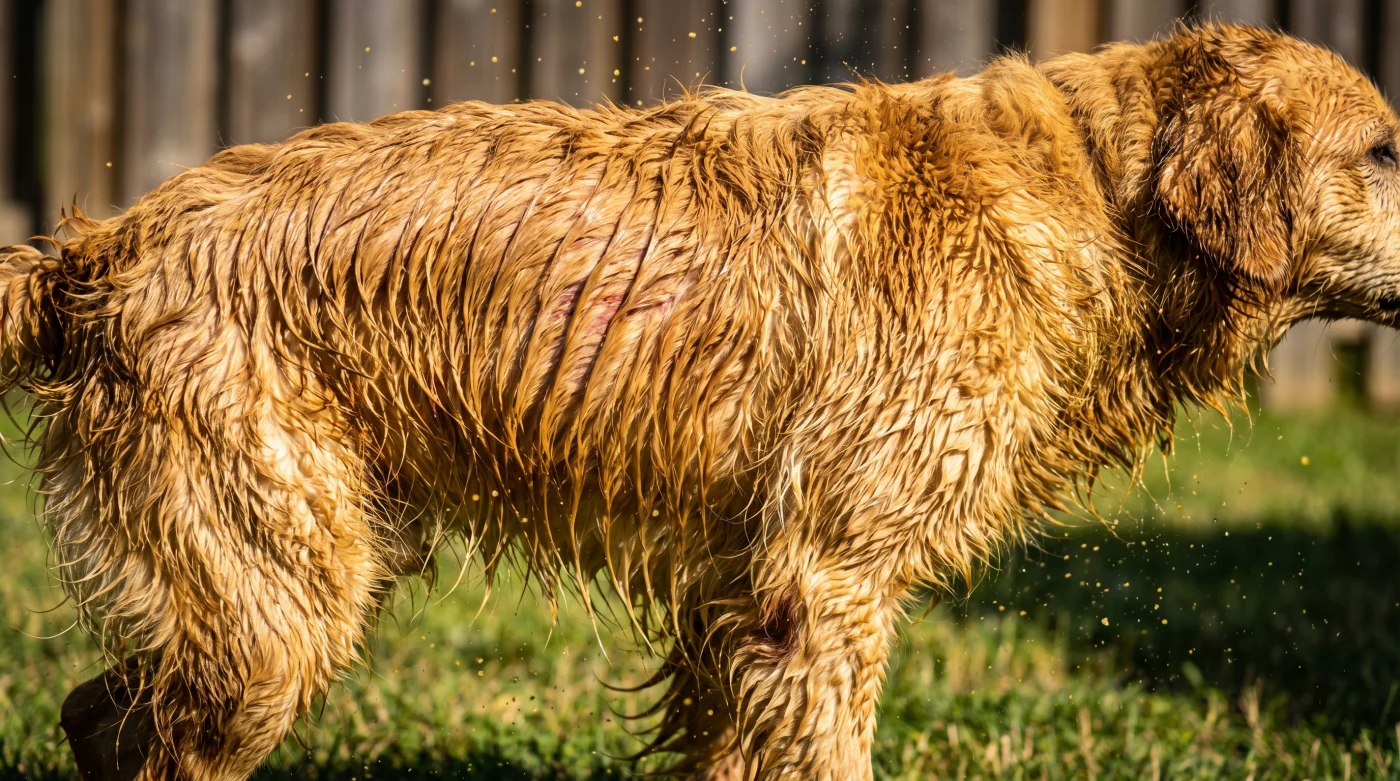
You watch the tumbleweeds of golden fur drift across the hardwood floor. The summer heat is climbing past 85 degrees Fahrenheit, and your retriever is panting heavily by the AC vent. Instinct takes over. You reach for the heavy-duty deshedding brush, the one with the aggressive metal teeth, hoping to carve out enough loose hair to finally give them some relief. You drag the rake through their coat, pulling away massive clumps, feeling a strange sense of accomplishment with every stroke.
But that satisfying pile of fur on the living room rug is lying to you. What feels like productive grooming is actually a slow dismantling of your dog’s natural defenses. The expectation is simple: brush daily, beat the summer shed, and keep the dog cool. The professional reality, however, is a biological backlash that ends up making your dog hotter, itchier, and far more likely to shed aggressively over the next month.
We treat grooming like a chore of extraction, a battle against the inevitable shedding season. You strip away the undercoat, assuming you are providing relief from the sweltering heat. It feels like you are doing them a massive favor by removing all that bulk.
Instead, you are sounding an alarm within your dog’s biological system. You are triggering an emergency response that ruins the very coat you are trying to protect, setting off a chain reaction of skin irritation and grease that traps the heat right against their body.
The Thermostat Metaphor: Why Less is More
Stop looking at your retriever’s coat as a thick winter sweater that needs to be forcibly removed. Instead, view it as a highly calibrated thermos. The outer guard hairs act as the durable shell, reflecting the harsh summer sun and repelling water. The dense, fuzzy undercoat is the insulation layer, trapping cool air against the skin during the summer just as effectively as it traps warmth in the winter. When you rake through it aggressively every single day, you are literally punching holes in their natural climate control system.
The fatal mistake is believing that a bare undercoat equals cool. When you over-use metal-toothed deshedding tools, the aggressive scraping damages the delicate guard hairs and irritates the skin beneath. This friction does not just remove dead hair; it rips out healthy, necessary follicles before they are ready to drop.
Your dog’s body interprets this aggressive loss as a vulnerability. It triggers an emergency oil overproduction to soothe the scraped skin and rapidly grow back the lost insulation. The perceived flaw of leaving some undercoat intact is actually your greatest advantage in preventing heatstroke. The oils become thick and sticky, binding the remaining fur into a matted layer that blocks airflow entirely.
Ask Marcus Thorne, a 48-year-old canine dermal specialist and former show-dog groomer from upstate New York. After watching dozens of frantic owners bring in retrievers with patchy, greasy summer coats, he stopped recommending deshedding rakes altogether. ‘People think they are helping,’ Marcus explains, holding up a sleek, unbroken guard hair to the light. ‘But when you scrape that metal across their skin daily, the body panics. It dumps sebum to heal the micro-abrasions, creating a sticky, matted mess that traps heat instead of repelling it.’
Tailoring the Tool to the Texture
Not every retriever handles the summer heat exactly the same way. Your approach needs to pivot based on the specific density and texture of the fur you are managing. A one-size-fits-all approach to grooming is exactly how undercoats get destroyed.
For the Feathered Golden: These dogs have long, silky guard hairs that are easily snapped by dull metal blades. Instead of a heavy rake, use a polished slicker brush. Focus on the chest and the dense areas behind the legs where mats naturally form, moving softly as if you are brushing a delicate silk scarf.
For the Dense-Coated Labrador: The short, thick double coat of a Lab requires friction, not blades. Metal teeth will scrape their skin raw before you even realize what is happening.
Rubber curry brushes are your best friend here. They massage the skin, coaxing out the dead hair without cutting the living strands, and naturally distribute the dog’s healthy oils rather than forcing an emergency overproduction.
The Mindful Grooming Protocol
Fixing a ruined undercoat requires stepping back and letting the skin heal. You have to trade the aggressive daily scraping for a more intentional, gentle routine.
Start by retiring the metal deshedding blade for at least three weeks. Let the skin’s oil production normalize. When you do brush, work in smooth, rhythmic sections, paying close attention to how the skin moves. If the skin pulls, you are applying too much pressure.
Here is your tactical toolkit for rebuilding a healthy summer coat without triggering an oil panic:
- Limit heavy brushing to once every two weeks during peak summer heat.
- Use a high-velocity pet dryer on a cool setting to literally blow out loose, dead undercoat without ever touching the skin.
- Opt for a rubber curry comb for daily tactile bonding and gentle surface dead-hair removal.
- Keep bathing water lukewarm—never hot—to avoid stripping the natural oils and restarting the panic cycle.
The Quiet Confidence of Stepping Back
Stepping away from the daily brushing ritual might feel strange at first. You are conditioned to believe that active, aggressive intervention is the only way to care for your dog during shedding season.
But true care often requires the patience to simply observe and let nature do its job. When you stop fighting the shedding process, a profound shift happens. You stop seeing your dog as a shedding problem to be managed and start appreciating the brilliant, self-regulating biological system they possess.
The tumbleweeds of fur will still appear around the house, but they will be lighter, naturally shed, and your retriever will rest much easier under the summer sun, protected by the healthy, balanced coat they were meant to have all along.
The greatest favor you can do for a double-coated dog is to put down the metal rake and trust the biology of their fur.
| Key Point | Detail | Added Value for the Reader |
|---|---|---|
| The Thermostat Effect | Undercoats trap cool air in summer and warm air in winter. | Prevents you from accidentally causing heatstroke by over-brushing. |
| Sebum Panic | Metal teeth cause micro-abrasions, triggering massive oil production. | Explains why your dog smells musky and feels greasy after grooming. |
| Air-Blowing | Using a cool-air pet dryer removes dead fur without skin contact. | Saves you hours of brushing while keeping the skin completely safe. |
Frequently Asked Questions
Will my dog overheat if I leave the undercoat alone?
No, leaving the healthy, un-matted undercoat intact actually traps cool air against their skin, acting as a natural air-conditioner.How do I know if I have ruined my dog’s coat?
If the fur feels unusually greasy, looks patchy, or if your dog is constantly scratching despite having no fleas, you have likely triggered an overproduction of sebum.Are all deshedding tools bad?
Tools with sharp metal teeth are risky for daily use. Rubber curry combs and polished slicker brushes are much safer alternatives for regular maintenance.How long does it take for a damaged undercoat to heal?
It typically takes three to six weeks of minimal, gentle grooming for the skin to heal and oil production to normalize.Can I still brush my dog every day?
Yes, but only with a soft bristle brush or a rubber mitt to distribute oils and remove loose surface hair without scraping the skin.